
Sunday, 3 February 2013

Irresistible You by Jemma Linley


I had hoped to publish this romantic novel before Christmas but it was a case of the best laid plans going awry.  Eventually I managed to publish it a couple of days before flying to Croatia for a couple of week rest (and to avoid the snow and ice in England!).  Rest?  I started writing another book - the third about Cleo Marjoribanks and Steaming Kettle.

But, back to Irresistible You.  The idea came about following several visits to Miami Beach, Florida.  I was living in Florida at the time and enjoyed several breaks in this city famous for its colourful Art Deco architecture.

Mel Sheridan, singer, and Andy Lomax, guitarist, once worked on the same cruise ship.  Now after failed marriages they meet again - on Miami Beach.  Andy is playing with a jazz combo and Mel is on holiday and they fall in.
When Mel left the ship moved to California and married singer Charles Prince.   He didn’t live up to his name and Mel divorced him.
Andy left the ship to form the combo with his friends.  He married Joanna who had also worked on the ships. 
Now Mel is considering moving to Miami Beach - provided she can get a Green Card, which can take a long time to obtain.
Although she has to spend time in England (between visits to Miami) both she and Andy have problems with their former spouses.  But that doesn’t affect their love for each other.
Will they live happily ever after or will a tragedy destroy that dream?

I should also mention that I once spent a year working on a cruise ship that sailed out of Miami.  And my experience of getting a Green Card also came in useful in the creation of this story.

No, I’m not going to tell you how it ends - you’ll have to buy the book to find out.

Irresistible You is available on Amazon Kindle, Kobo, I-Pad, Sony and other e-readers and can also be downloaded to computer via Smashwords.  (www.smashwords.com/profile/view/barbarabothwell).

Friday, 4 January 2013

"I'm writing a book".

All writers hear this admission from strangers. My most recent one was whilst in Spain.


As my books are e-published I always carry some brochures with me and, whenever I see someone with an e-reader, I try to get chatting to them and hand over one of my brochures. The first evening at the hotel I did meet a lady with an e-reader and did my public relations bit. A little later in the evening I was chatting to a couple - or rather, he was doing the talking. His wife said barely a word and, as I soon realized, it didn't matter what I said, he wasn't listening.

Eventually he brought the conversation round to the brochure he had seen me give that lady. I handed him one…. "I'm writing a book. Doing it all by hand." And, no, I didn't believe that he was doing it in the way so many of us do - write then type. I remembered that during his chatting he had mentioned that they don't have a computer.

Having told me what it was about - no, don't ask, my eyes glazed over. I assume it was the usual retired man's expertise on running the world. Eventually he wound down with those famous words, "I'll send you a copy and you can let me know what you think." Didn't ask, you notice. (This was the same man who wished his wife on me so that he didn't have to bother going on excursions - see blog on www.auntiestravels.blogspot.com)

I side stepped the issue every time it came up during the week. On the last day I sat down and wrote a 'dissertation' on what he needs to do if he wants to get published - including the various expenses. That was followed with information on publicizing oneself via Twitter/blogs/web pages. After dinner that evening I handed it to him. He glanced at it and said "Oh I know all about that," and stuffed it in his pocket. Then told me, "I'll go to Waterstones to buy your books."

You should have seen his face when I told him he won't find them in there. Of course he hadn't read the brochure properly nor had he listened to what I had told him. Once he had recovered he told me that my address and telephone number aren't on the brochure. "No, I don't have them on there. Neither do I have any business cards with me." Bye-bye, sweetheart. Did he really think I was that stupid? Probably. Especially as he had offered to share his profits with me. The way I see it, 50% of nothing is nothing.

Friday, 7 December 2012

The Duchess of Drury Lane by Freda Lightfoot


This novel about Mrs. Jordan, the long-term mistress of the Duke of Clarence ingeniously weaves fact with fiction.  As very little is known about Dora Jordan’s early life Lightfoot has created a plausible early story.

As a very successful actress Jordan earned enough money not just to support her family but also to pay for some of Clarence’s extravagances.  Her family consisted of sisters and brothers as well as her many children, most of whom were fathered by Clarence.

Jordan’s life fell apart once Clarence became heir to George IV and it became necessary for him to produce a legitimate heir which meant marrying a suitable candidate.  He subsequently became William IV and, ironically, Queen Adelaide was unable to produce children.

The Duchess of Drury Lane was what the ‘press’ of the time called Dora Jordan and, yes, the public could be vicious as well as adoring.  Nothing changes!

This book is well researched and, as with all of Lightfoot’s books, is eminently readable.  I reckon she deserves a gold star.

 Freda Lightfoot

Wednesday, 21 November 2012

Stephen Foster - America's First Pop Song Composer


The Suwannee River at White Springs, Florida

The name Swannee immediately brings Al Jolson to mind. But there is another song which also refers to this river: "Way Down Upon the Swannee River", better known as "The Old Folks at Home", by Stephen Foster who never saw the Suwannee River.

Stephen Foster was born in 1826 in Pittsburgh, on a most appropriate date for an American who was to become known for his all-American songs - July 4th.  The family was prominent in local politics, commerce and the social life. Stephen's father, William, was a member of the Pennsylvania State Legislature and mayor of Allegheny City (a suburb of Pittsburgh). William and Eliza Foster had eleven children and, following the death of the youngest, Stephen was then the cherished youngest child.

The whole family was interested in music, art and literature and it didn't take much encouragement for the baby of the family to acquire his interest in those arts.  Although Stephen showed that music was his first love, his family merely thought of it as an interesting hobby. What he learned about music was through his own efforts and not from serious study. Most of his early boyhood was spent in or near Pittsburgh with occasional visits to Ohio. In fact, he spent most of his life in Pittsburgh, wrote most of his best songs there, and is buried there.

At school he was a rebel. Unable to adapt to discipline and routine he preferred to study only subjects which interested him. Unfortunately, music had little place in the curriculum.  When he was fourteen and attending the Athens Academy (in Pittsburgh), he wrote his first musical work: The Tioga Waltz. His inspiration for this was Tioga Point, a local beauty spot. The waltz was arranged for flutes and presented in a school programme at the Presbyterian Church in Athens in 1841. Stephen played one of the flutes. Although he had the satisfaction of being enthusiastically applauded, The Tioga Waltz was not his first published work. It wasn't published until many years after his death.

His education continued, mostly with private teachers from whom he learned French, German and painting. He also worked occasionally in an office or a warehouse. His leisure hours were devoted to music. His father is quoted as saying, "he possesses a strange talent". An understatement if ever there was one!

In 1843 he found some verses in a magazine and set them to music. This was published in 1844 - "Open Thy Lattice, Love". As he probably didn't earn anything from this, his family felt that music did not hold out much promise of a life's work. 

When he was nineteen he formed an all-male singing group which met twice a week at the Foster home. Usually they sang the popular songs of the day, then Stephen began to compose for them. Two were to make him famous: "Old Uncle Ned" and "Oh! Susannah".  But not for a few years yet.

Eventually Stephen shared his family's concern about his future and thought he might try a career in the army. Fortunately, in 1846, he learned that his application for West Point had been rejected. With his family's encouragement he moved to Cincinnati to become a bookkeeper in a steamboat agency on the Ohio River. He was there for three years and they were among the happiest and most formative of his life.

From his office window he could see the activity on the river. Passenger boats, freight boats, southern planters, river men, gold-seekers bound for California. It was no wonder that he began to write songs and subsequently abandoned a business career to become a professional composer.

He gave copies of "Old Uncle Ned" and "Oh! Susannah" (as well as other songs) to several of his acquaintances. The minstrels sang them, the public loved them, and the minstrels took them all over the country. And they were published, but without his consent so he earned nothing. Because he had overlooked the possibility of financial gain, he had failed to protect his own interests through copyright or contracts with the publishers.

He eventually decided that it was time to profit from his writing and contracted with the New York firm of Firth, Pond & Co.

Now that he was devoting himself to music, he returned to Pittsburgh and became very ambitious. He worked hard and achieved immediate and spectacular success. The next six years were the most successful of his entire life. He wrote over 160 works - songs, compositions, arrangements and translations.  But he was also composing songs which would never die.  Songs such as "Camptown Races", "Old Folks at Home", "Massa's in de Cold Ground", "My Old Kentucky Home", "Old Dog Tray", "Jeannie with the Light Brown Hair".

At about the time of his return to Pittsburgh, Stephen Foster contacted the leader of the Christy Minstrels - Edwin P. Christy. The most famous minstrel band performing in the United States at that time. At Stephen's suggestion, the Christy Minstrels were to be the first to sing his new songs and the title pages of those songs would bear the legend, "As Sung by the Christy Minstrels".

Oh yes, Christy did pay for this - but only a small sum. Had Stephen Foster been a better businessman there is no doubt that he could have made a more advantageous bargain.
He also made another bad mistake. In 1851, "Old Folks at Home" was published. The title page read: "As Sung by Christy's Minstrels - Written and Composed by E.P. Christy". For the sum of a miserly $15.00 Stephen Foster had sold the right to claim authorship to Christy. And that was Stephen's idea! A year later when he realised his mistake - this song was among his best and extremely popular in the United States and Europe - he asked Christy to cancel the transaction. Naturally, Christy refused. The mistake wasn't rectified until 1879, fifteen years after Stephen Foster's death, when the song was re-copyrighted and given the correct accreditation.

Fortunately, although the song was originally credited to Christy, the royalties of the sales went to Foster. During his lifetime he received $1,647.46. After it was re-copyrighted, his heirs received nearly $2,000. A most profitable work.

The years from 1853 to 1860 were dark days for Stephen Foster. His marriage was rocky, his expenses high and he began to drink. But, in 1860 he wrote another great work. "Old Black Joe", a song of intense emotion. Was he singing about his own problems? Probably. It isn't known whether he was paid cash for this song or whether he received royalties.

After this he moved to New York but the only song he wrote during his last four years which we remember is "Beautiful Dreamer". His career wasn't helped by the Civil War which broke out in 1861. It destroyed the market for his songs.

Stephen Foster was seriously injured when he fell in his room in the Bowery and, although he was taken to hospital and died three days later. Aged thirty-seven.
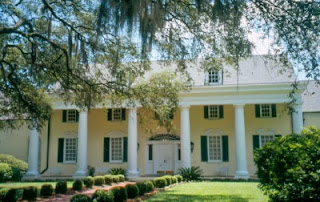
The Stephen Foster Memorial in White Springs, FL.
At the beginning I said that Stephen Foster never saw the Suwannee River. So, why write a song about it? The nearest he came to the river was New Orleans, in 1852, some months after "The Old Folks at Home" was written.  In 1851 he was working on a new song for the Christy Minstrels. According to the first draft, the opening words were, "Way down upon de Pedee ribber...".  Stephen had the Pedee River of South Carolina in mind. Not satisfied with the name he asked his brother Morrison for advice. Yazoo River?  Not romantic enough. They opened a map of the United States and looked for a southern river with a romantic sounding name. It was Morrison who pointed to the Suwannee River in Florida. Except that Stephen shortened it to Swannee to fit the music.

Friday, 2 November 2012

River Douro Cruise

If you would like to read about this super cruise which I took in September go to Aunties Travels.  Aunties Travels

Tuesday, 16 October 2012

The Pearly Kings and Queens of London


The Pearly Kings and Queens are a charitable group of Londoners.  All cockneys and great fun to be around.  They date back to 1875 when a young man called Henry Croft was looking for an idea to bring attention to his charity work.

Henry was an orphan and at age thirteen was working as a road sweeper in north London.  He also worked in a market and was drawn to the Costermongers (market traders) whom he found to be generous people.  He was fascinated with their clothes which were decorated with pearl buttons that were stitched onto the seams of their bellbottom trousers, jackets, waistcoats and caps.  This was to show their status in the market.  Henry also learned that they looked after one another during times of sickness or need.

So impressed was he that Henry decided he would like to help people less fortunate than himself.  Whenever he was sweeping up around the market he often found pearl buttons that had fallen off so he collected them up.  Gradually he sewed them onto a suit of his own until it was totally covered.  This is what is now called a “smother suit”.  The ones with fewer buttons stitched in various designs are called skeleton suits.

Henry became so successful at raising money, not only for the orphanage where he grew up, but also for hospitals and workhouses, that he needed help.  That is when he turned to the Costermongers, many of whom became the first Pearly Families.  There were twenty-eight families, one for each of the London Boroughs, one for the City of Westminster and one for the City of London.

Most of today’s Pearly Kings and Queens are direct descendents of those Costermongers.

The Pearly Suits
All of the suits are of dark fabric, preferably velvet.  The pattern is laid out and the pearl buttons gradually, slowly and lovingly stitched on.
There are many designs for the suits, which usually reflect the owner’s particular interests.  For example:
·                                Bells – for Bow Bells
·                                Horseshoes – for luck
·                                Doves – for peace
·                                Hearts – for charity
·                                Anchors – for hope
·                                Crosses – for faith
·                                Wheel – for the circle of life
·                                Playing cards – life is a gamble!
·                                Flower pots  and donkey carts – costermongers

The outfits have tens of thousands of buttons on them and can weigh as much as 66lbs. 

The Pearly Guild
Almost every area of London has its own “royal” family within the Pearly Guild.  A prince or princess can only graduate to the status of King or Queen once their elders are sure of their maturity, have knowledge of the group’s history and have a strong commitment to the job of collecting for charity.  And, of course, they can only become a pearly king or queen if there is a vacancy.  Mostly the title goes to a descendent of the family but sometimes a family dies out or moves away. 

The Pearlies take every opportunity to dress up and collect for charity.  They can be seen in parades, at Bank Holiday Fairs such as on Hampstead Heath and even travel outside of London when requested.  The one day in the year when they all try to gather for a parade is for the Lord Mayor’s Show which occurs early in November (on a Saturday when the City is ‘closed for business’) and wends its way through the City of London from the Mansion House taking a circular tour and back to the Mansion House..

To learn more about the Pearlies, visit their web site at www.pearlykingsandqueens.com

Photos provided by the Pearly Guild.

Monday, 24 September 2012

Recycling


I have no problem with recycling - I was brought up to do it.  Rather like taking your rubbish home with you after a picnic (or whatever).  I religiously re-cycle everything I possibly can, taking it to one of the local charity shops or, if it isn't reusable, finding the appropriate skip.  And, like everyone else, I keep a bag beside the front door for all that junk mail!

Unfortunately I recently had a big problem.  When taking my junk mail and other appropriate bits and pieces to the skip I discovered that someone had dumped about 200 books (paper and hard backs) into the four skips.  I managed to retrieve about 100 but couldn't reach the others.  I left a note for the maintenance man and the next morning he managed to retrieve the rest of the undamaged books.  In total we saved about 200 books which are now stored in his shed.  Why stored there?  Because I cannot find a charity shop willing to come and collect them.

I'm still wondering what part of "Can you collect them?" they don't understand.  The popular reply is "Could you bring them?"  On one occasion I ironically replied, "Two at a time?"  "That would be fine," she responded.  I don't think so.  Think how many journeys that would be and I wouldn't do them all in one day and not necessarily more than one trip a week.

Forgive me for my naivety, but charity shops are operated by volunteers some of whom have cars.  What is the point of volunteering to help if you can't go and collect at least a few of the books?

Plastic bags:
So Europe is trying to dictate again on the subject of plastic shopping bags and saying that shops should charge us for them.  Bearing in mind that most of us use them as bin bags instead of wasting money on buying bin bags, that seems counter productive unless....
those politicians have shares in the companies that make plastic bags, of course.
Hey-ho!